
Upton Three-Day Release Access
No official rolling 72-hour view, archive, or three-day filter was found on the Upton County Sheriff website. Its inmate-search item leads to a private directory. The county publishes no event fields, photo policy, refresh rate, or post-release display period for that destination.
The useful three-day product is therefore a bounded request for existing jail events. Define the start and end date and time. Ask for actual release timestamps and dispositions, with confidential fields redacted. A wider interval can capture Friday through Monday activity that a calendar-day check would miss, but it does not cure vendor delay.
Check Upton Three-Day Releases
Choose either a rolling 72-hour period or three calendar dates. Write down both endpoints and use them for the jail, court, and follow-up searches. This avoids including a release merely because a profile was updated during the interval.
- Call Upton County Jail at 432-693-2422 and ask about current custody and recent disposition.
- Request the existing release log or custody events for the exact interval.
- Search the official Upton court portal for each matching cause and legal event.
- Separate community exits from TDCJ, another-county, federal, or ICE transfers.
- Use VINELink or IVSS as notification leads and verify timestamps with the custodian.
For activity limited to the current day, use Released Last 24 Hours.
Upton 72 Hour Record Fields
Upton County publishes no official three-day column set. Ask for the following fields only if they exist in the Sheriff's system, and allow lawful redaction.
| Field | Purpose |
|---|---|
| Name and booking number | Links the event to one booking |
| Booking time | Marks custody intake |
| Release date and time | Tests the three-day interval |
| Release code or reason | Distinguishes bond, completion, order, or transfer |
| Court or cause number | Connects the legal file |
| Destination agency | Shows whether custody continued |
A court judgment may explain release but often cannot prove the exact physical exit time. Pair it with the jail event.
Upton Weekend Release Delays
A Friday-to-Monday interval can bridge days when an office is closed or when data is sent later. Yet no Upton source publishes a weekend release schedule or guarantees a vendor update time. Do not infer that a Monday profile change proves a Monday release.
Use the recorded jail timestamp. A court order, bond posting, records audit, warrant check, or receiving-agency pickup can occur at different times. For one person whose route is unclear, the Upton County released inmate search compares all custodians.
Note: Include the full weekend in writing, since “three days” can be read as calendar dates or a rolling period.
Request Upton Three-Day Records
Send the request to Upton County Sheriff's Office, P.O. Box 27, 1106 North Grand Street, Rankin, TX 79778. Ask for electronic copies and a cost estimate. No dedicated online PIA portal, fixed release-log fee, or public records-unit hours were verified, so call first to confirm delivery.
Government Code Chapter 552 permits access to public government records while preserving applicable exceptions. Ask for segregable public portions when identifiers, juvenile information, medical facts, victim data, or active-investigation material requires redaction. The agency may seek clarification and need not create a report it does not maintain.
Online visibility is not retention. Texas Local Schedule PS makes the jail register permanent and keeps booking, transport, transfer, and release documents for at least two years after release or transfer. A request or lawsuit can extend retention.
Upton Roster Ownership Limits
Upton's official “Inmate Search” is an outbound link to InmateAid, not a county-hosted roster. No persistence rule explains when private profiles appear or disappear. Name variants, vendor coverage, removals, and delayed imports make absence weak evidence.
The direct jail event and official court portal are the fallback. If the event says transfer, continue with the receiving agency. Do not call that person released to the community.
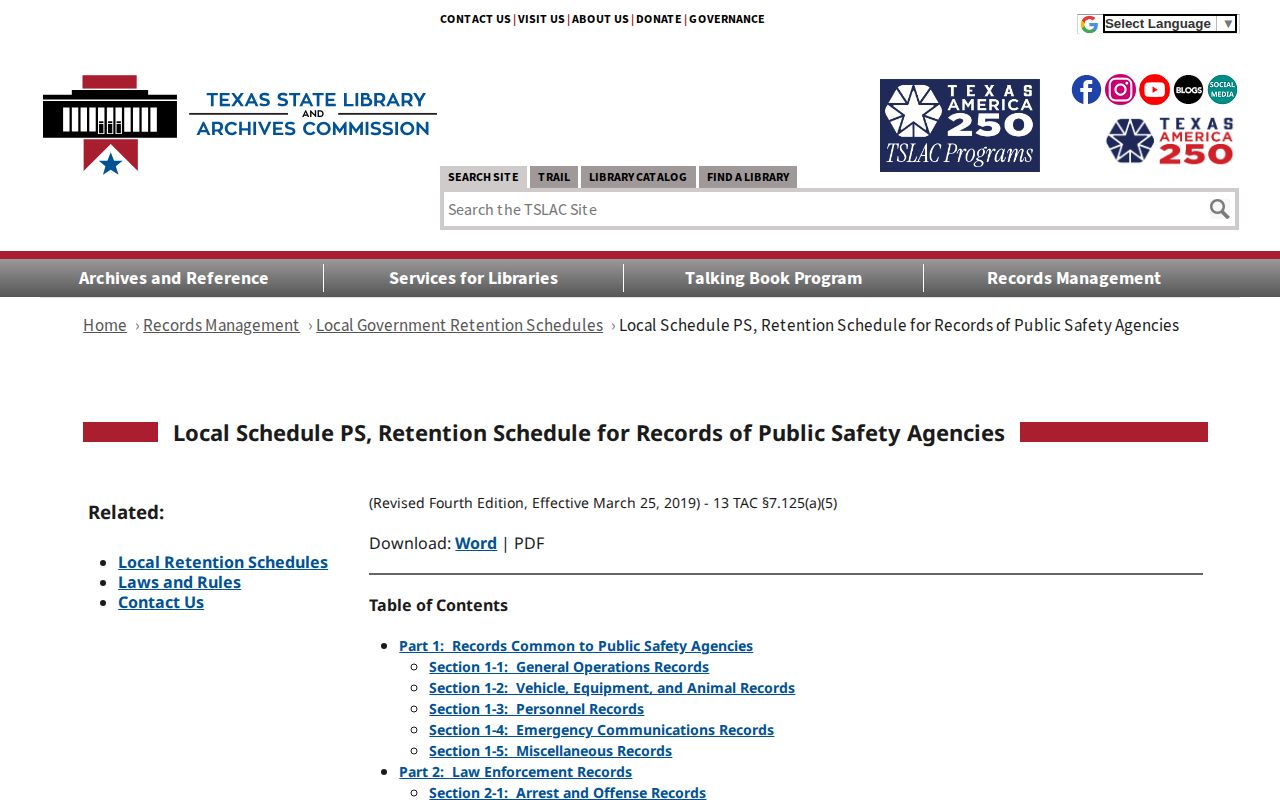
The captured source supports requesting retained records even when no timed archive is online.
Cross-Check Upton Three-Day Events
The Upton District/County Clerk links a civil and criminal public portal that may preserve docket history after a roster entry disappears. Search by name, then use the cause number and court designation to isolate the correct case. Entries for bond, dismissal, judgment, jail credit, community supervision, revocation, and discharge can explain why custody changed during the three-day span.
Docket timing and jail timing are not identical. A bond order can precede final processing. A dismissal can coexist with another hold. A prison judgment points toward transfer, not community release. The jail event supplies the physical timestamp and disposition, while the docket supplies the legal authority. Keep both.
When the court portal suppresses a document, ask the clerk about public access without seeking confidential content. Juvenile records, protected victim data, and sealed or expunged material require care. An unavailable case should not be reconstructed from a private jail profile.
Upton Three-Day Notification Checks
VINELink can help identify a custody change from a participating reporting agency. Choose Texas, search one person using a name and any accepted identifier, and confirm the agency before reading the event. A released or out-of-custody label applies to that reporting agency. It does not rule out transfer to TDCJ, ICE, USMS, or another county.
Texas also uses IVSS for TDCJ custody, parole, mandatory supervision, and related notices. The state launched an IVSS Counties architecture in 2025, but the research did not confirm Upton's participation. Check the live portal or call 1-877-TX4-VINE. Do not promise a delivery method or event type until the service offers it for the record.
Notification timestamps can lag or be corrected. Save the event details as a lead, then ask the jail or receiving agency for its custody record. A notice is useful for follow-up, not a substitute for the release log.
Route Upton Transfers Correctly
A TDCJ transfer should appear in the statewide corrections path, not an Upton recent-release list. Search by TDCJ or SID number when known and distinguish current facility, parole eligibility, projected release, and actual release. Eligibility and projected dates do not prove that the person left a state institution.
For a federal sentence, the BOP locator covers records from 1982 forward and may display a release date. For federal pretrial or transport custody, use PACER and the responsible U.S. Marshals district. For immigration custody, use the ICE locator. None of those systems proves what happened in another custodian's records.
A three-day Upton release request should preserve the destination agency field. That single fact often determines whether the next useful record is TDCJ, BOP, a federal docket, ICE, another county, parole, or the community court file.
Interpret Upton Release Reasons
A three-day list needs more than names. Bond means the person left pretrial custody subject to court duties. It is not dismissal. Time served or sentence expiration connects the exit to a completed custodial term, though another cause can block physical freedom. A transfer ends the Upton booking episode but keeps the person in another agency's custody.
Probation, also called community supervision, comes from a court and may begin without a prison stay. Parole and mandatory supervision are conditional state-prison releases managed through TDCJ. A dismissal can support release when no other hold exists, while a deceased disposition must never be described as release to the community.
Preserve the jail's exact code and ask what it means in that system. Pair it with the cause number, court event, destination, and actual release time. This record set keeps a broad three-day search from flattening distinct outcomes into one misleading category.
Narrow Upton Release Requests
A focused request is faster to identify and less likely to need clarification. State the exact three-day boundaries, ask for existing records, and name the few fields needed to distinguish release from transfer. Request electronic delivery. If the office anticipates labor or copy charges, ask for an estimate before processing beyond a chosen limit.
Do not ask the Sheriff to explain a judge's reasoning, calculate a sentence, or create an analysis. Those are not existing jail records. Ask the court for filed orders and judgments, and ask TDCJ for its own public inmate information when state custody applies.
When part of a record is protected, request the segregable public portion. A lawful redaction does not erase the value of the release time, reason, booking number, or destination when those fields remain public.