
Upton Parole and Probation Compared
Texas parole and probation come from separate legal paths. Parole and mandatory supervision follow release from a Texas Department of Criminal Justice institution. The Texas Board of Pardons and Paroles decides whether an eligible person receives parole or discretionary mandatory supervision, while the TDCJ Parole Division manages supervision after release. Probation, formally called community supervision, is imposed by the trial court and managed through a Community Supervision and Corrections Department.
An Upton County defendant can receive probation without entering TDCJ. Another person can leave Upton County Jail on bond and have neither parole nor probation. A state prisoner sentenced in an Upton case may later leave a TDCJ unit on parole. These distinctions determine which record can confirm status.
| Question | Parole | Probation |
|---|---|---|
| Who orders it? | Texas BPP after TDCJ review | Trial court in the criminal case |
| What custody comes first? | TDCJ prison or state-jail custody | May begin without state prison |
| Who supervises? | TDCJ Parole Division | Local or shared CSCD |
| Best public starting point | TDCJ and BPP status | Upton criminal docket and judgment |
| How it ends | Discharge or other TDCJ status | Court termination or discharge order |
- Parole
- Conditional release from state prison before the sentence fully expires.
- Probation
- Court-ordered community supervision, which may replace a prison term.
- Mandatory supervision
- A TDCJ release form governed by offense date, eligibility rules, and sometimes a Board decision.
- Discharge
- The formal end of a sentence or supervision term.
Verify Upton Post-Release Supervision
Start with the source tied to the last known custody. The TDCJ Online Inmate Search is for state prisoners, not Upton County Jail bookings. Its details may show a current unit, projected release date, parole eligibility date, and review information. Eligibility only opens review. Even an approval can precede physical release while a plan, program, certificate, detainer, or records audit remains unresolved.
- Search TDCJ by number when known, or by full name and available refiners.
- Match age, identifiers, county of conviction, offense, sentence, and current location.
- Read the BPP decision and next-review fields without treating eligibility as release.
- Check the Parole Division directory for the office serving the approved release area.
- For probation, search the Upton criminal court portal for the judgment, community-supervision order, revocation entries, or discharge.
- Ask the District/County Clerk which CSCD received the adult case when the docket does not identify it.
Active parole status supports the conclusion that the person left the institution into supervision, but it does not mean the sentence has ended. A probation judgment proves the court placed the person on community supervision, not the exact time the jail completed an exit. The broader Upton County released inmate search explains how the jail event and court cause work together.
Note: Preserve the TDCJ number or Upton cause number because names alone can match the wrong person.
Upton Parole Review Records
The Board does not hold a routine formal hearing for each parole or mandatory-release review. Panel members review and vote on the file. The official BPP review process says the Parole Division generally identifies a case about six months before initial eligibility and about four months before a later review. An interview is discretionary. A denial normally includes a next review date.
The review page shown below is useful because it separates case preparation, Board review, and the later work needed for release. Those stages should not be compressed into a claim that a person has already left custody.
View the official Texas parole review sequence before interpreting an Upton County status.
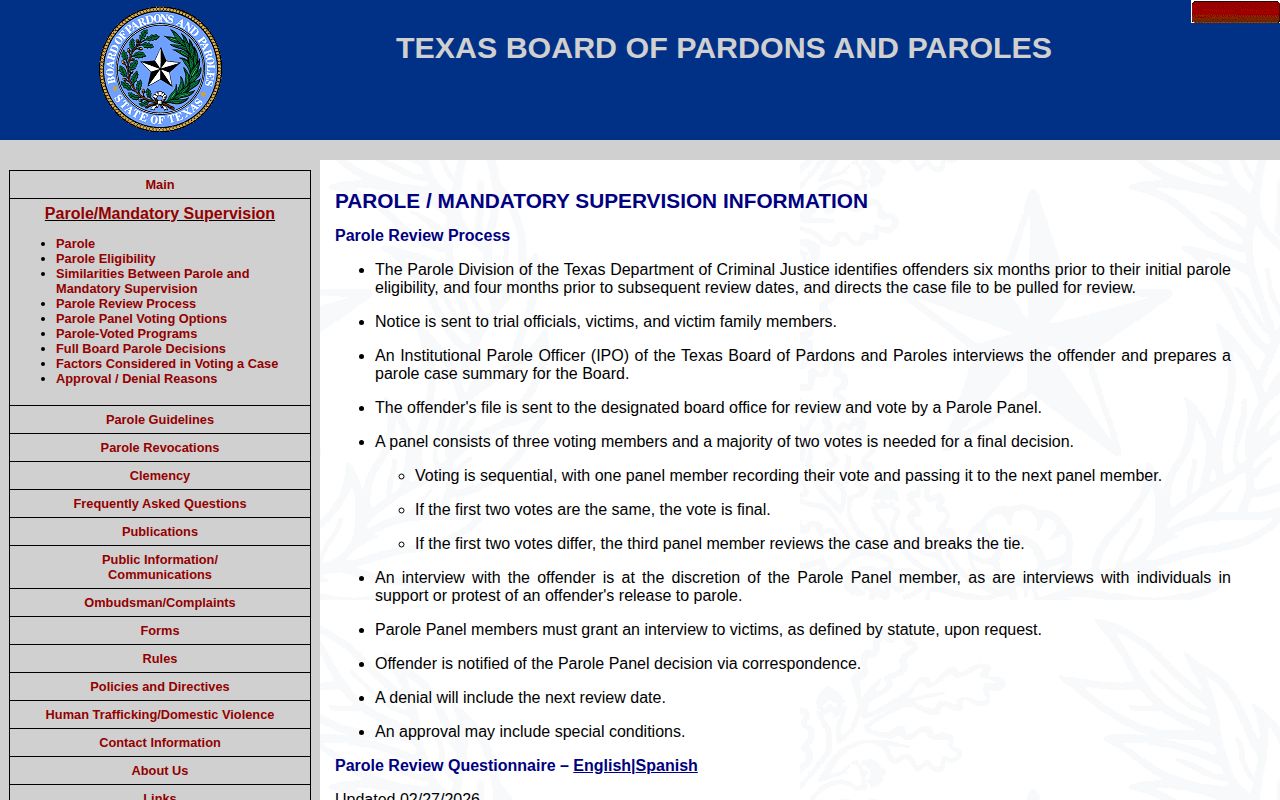
The official process confirms that eligibility, review, vote, release preparation, and actual release are separate events.
Upton Supervision Office Routing
Office routing follows the approved release area, not simply the county of conviction. TDCJ's county cross-reference assigns Upton County to the Monahans District Parole Office in Region V. Probation uses a different route: the Community Justice Assistance Division county lookup places Upton in a shared CSCD group with Brewster, Crockett, Jeff Davis, Pecos, Presidio, Reagan, and Sutton counties.
Monahans District Parole Office
401 South Allen Avenue
Monahans, TX 79756
Phone: 432-943-7254
Fax: 432-943-7397
Pecos County CSCD main contact
111 West Gallagher
Fort Stockton, TX 79735-1706
Phone: 432-336-8562
Fax: 432-336-2932
Confirm the assigned office before relying on either address. No Upton satellite hours or public person-level probation lookup was verified. Office staff also may not release confidential schedules, residence plans, or case notes.
Open the official CJAD county lookup to see the shared supervision routing.
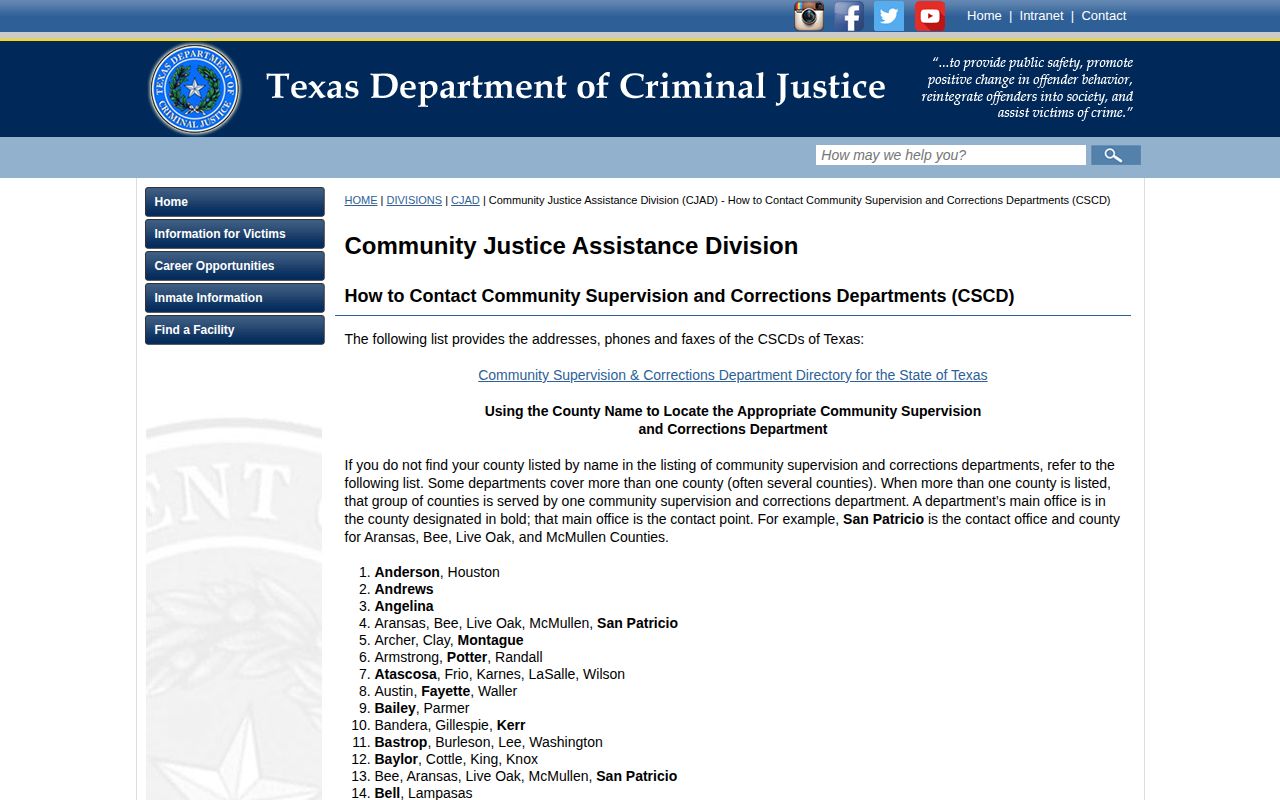
The statewide directory supports office identification, while the Upton judgment remains the source for whether probation was ordered.
Upton Release Office Follows Placement
A person convicted in Upton County may be approved to live and report elsewhere. The assigned parole office follows the approved release and reporting structure. It should not be inferred from the sentencing county alone. That local detail matters because the Monahans office is the county cross-reference starting point, but another district may ultimately supervise an approved placement.
For probation, begin with the Upton docket and judgment, then confirm the shared CSCD assignment. Do not infer a private reporting schedule. A public record may confirm the term, disposition, and a later termination order while other supervision details remain restricted.
Note: An office directory identifies the proper agency contact; it is not a public log of private supervision appointments.
Upton Warrants and Violations
A violation allegation does not itself prove revocation. A blue warrant, which is a parole warrant, may return a releasee to county custody while revocation is pending. Check the Upton jail contact, TDCJ/BPP status, and court record rather than relying on one old status. No general Upton Sheriff warrant or parole-absconder list was verified.
TDCJ and the Texas DPS registry publish specialized sex-offender information, but those sources are not universal supervision lists. Registry presence depends on a legal duty to register. Absence from the registry says nothing about whether another person is on parole or probation.
Upton Supervision Notifications
Texas IVSS serves the TDCJ custody, parole, and mandatory-supervision layer. Its notices can include parole eligibility, Board decisions, bench-warrant movement, prison release, and discharge. VINELink may cover participating county custody events, but the live service must confirm Upton participation. Neither service replaces the releasing agency's record.
A notification timestamp is a lead. Data can lag or be corrected. Confirm an Upton County jail event with the Sheriff and a state event with TDCJ or the Parole Division. Never publish a notification PIN or private registration data.
Upton Supervision Discharge Records
Supervision ends through a formal record. For parole or mandatory supervision, ask TDCJ for the public release, supervision, or discharge status tied to the TDCJ number. For probation, use the Upton court portal and clerk to locate an order terminating or discharging community supervision. A completed term should not be inferred merely because an old roster entry vanished.
Texas public records remain subject to confidentiality and statutory exceptions under Government Code Chapter 552. Request the public disposition or existing status record, not confidential case notes. A narrow request with the name, identifier, cause number, and date range is more likely to reach the correct custodian.
Upton Supervision Record Conflicts
The Upton docket can show revocation, capias, or a later order that changes the apparent end date. Read the filed document when available instead of relying on a short status label. A discharge from one form of supervision does not resolve a different cause, warrant, or registration duty. When records conflict, ask the clerk or TDCJ to identify the record date and governing case before treating supervision as complete.
Compare the date each source was updated. A Board vote is prospective, an active Parole Division status reflects supervision, and a discharge record closes the term. Probation requires the court judgment and later termination order. These records belong to different agencies and should not be merged into one assumed timeline.